
Acne Scars — Aesthetic Treatment Options, Central Hong Kong
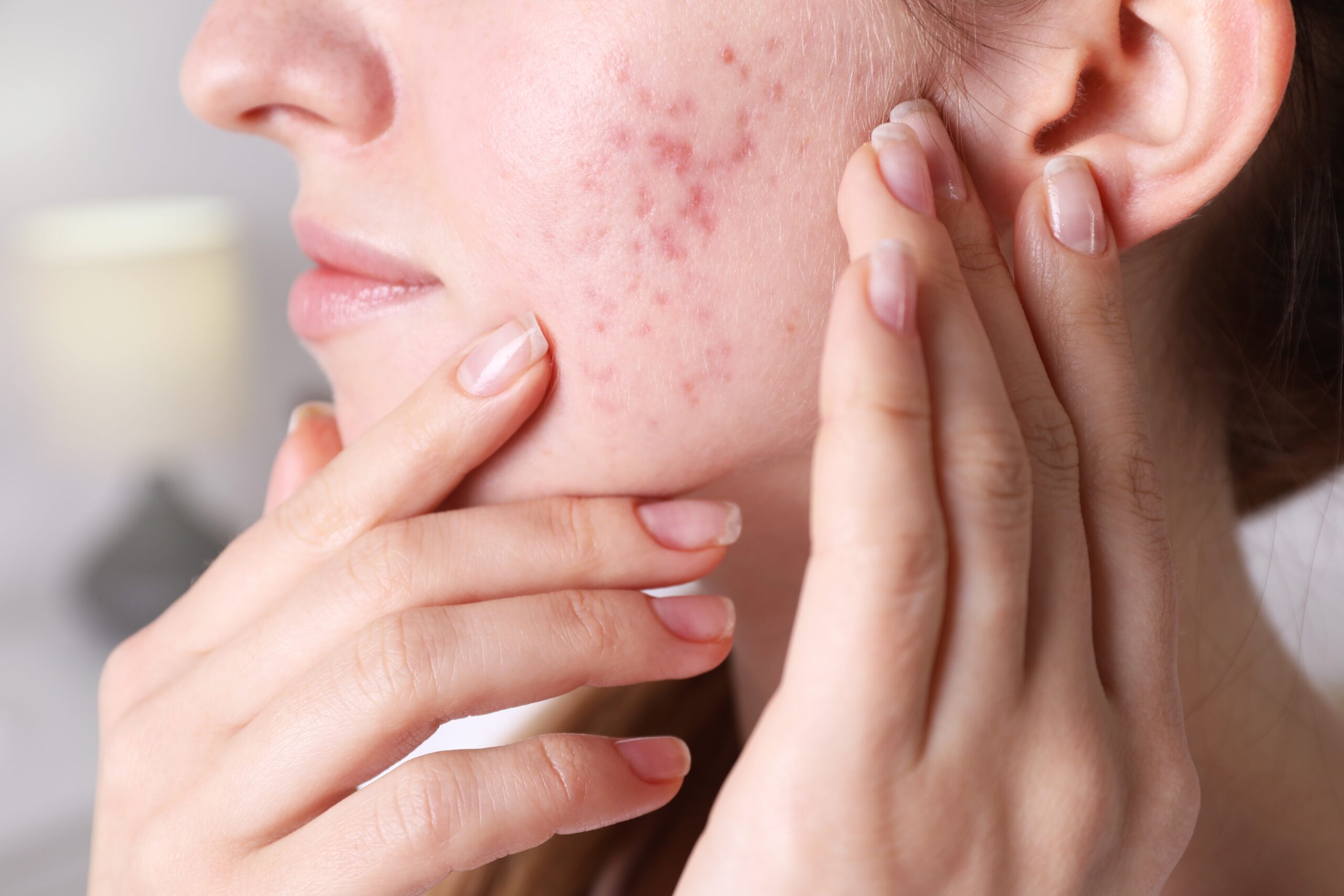
Acne leaves two marks — the active breakouts and the scars they leave behind. Sometimes the breakouts stop but the texture remains: pits, rolling depressions, and unevenness where inflammation once sat. The Skin Oracle is a medical aesthetic centre in Central, Hong Kong. This page is about acne and acne scars — from managing active breakouts to resurfacing the scars they leave behind.
Acne is a common skin concern that occurs when pores become clogged with oil and dead skin cells, leading to blackheads, whiteheads, papules, or deeper, inflamed bumps. When the inflammation is severe or prolonged, it can damage the skin’s structure and leave behind permanent textural changes — atrophic scars (indentations) or raised scars. Each type requires a different treatment strategy.
What Causes Acne and Acne Scars
Excess Oil Production and Blocked Pores: The sebaceous glands produce sebum — an oily substance that normally protects and hydrates the skin. When production is excessive, combined with dead skin cells that are not shed properly, the pore becomes blocked. This creates an environment where bacteria can multiply, leading to inflammation.
Inflammation and Tissue Damage: When a blocked pore becomes inflamed — red, swollen, tender — the body’s immune response attempts to contain the infection. If the inflammation reaches deep into the skin, it can destroy collagen and elastin fibres in the area. When the body repairs this damage, it may not fill the area completely, resulting in a depression — an atrophic scar.
Types of Acne Scars: Not all scars look the same. Icepick scars are narrow, deep pits that look like small punctures. Boxcar scars are wider depressions with sharp edges. Rolling scars have a wave-like appearance across the skin surface. Raised scars (hypertrophic) occur when the body produces too much collagen during healing. Each type responds to a different treatment approach.
Contributing Factors: Hormonal fluctuations play a significant role in acne — many individuals experience breakouts during puberty, menstrual cycles, or periods of stress. Genetics determine skin type and predisposition to scarring. Lifestyle factors like diet, sleep quality, and skincare habits can influence both breakouts and healing.
Continued Healing Challenges: Once a scar has formed, the body’s natural repair processes are limited. Scar tissue is structurally different from healthy skin — it lacks the normal arrangement of collagen fibres and does not regenerate hair follicles or glands. This is why professional treatment is often needed to improve scar appearance.
Treatment Approaches at The Skin Oracle
AGNES RF — For Active Acne and Sebaceous Gland Control: AGNES RF uses radiofrequency energy delivered through a fine insulated needle to target individual sebaceous glands. By precisely heating the gland, it reduces oil production at the source without affecting surrounding tissue. This makes it highly effective for active, recurring breakouts — particularly those in the same spots that keep re-flaring. Results are long-lasting because the gland’s activity is permanently reduced.
PicoSure Pro – regulates sebaceous gland secretion in acne-prone skin through a gentle photomechanical pathway rather than thermal destruction. Utilizing a 755nm wavelength with ultra-short picosecond pulses focused through the Platinum Focus™ Lens Array, the laser creates microscopic Laser-Induced Optical Breakdown (LIOB) within the epidermis and upper dermis. The resulting acoustic shockwaves physically “stun” overactive secretory cells (sebocytes) to temporarily downregulate lipid synthesis, while simultaneously triggering a dermal remodeling cascade that produces new collagen and elastin. As this fresh collagen matrix matures, it exerts lateral mechanical pressure that physically constricts the sebaceous glands and follicular canals to restrict oil flow. This physical compression, combined with accelerated epidermal turnover that clears obstructive keratin plugs and calms underlying microvascular inflammation, successfully breaks the physiological feedback loops that drive excess sebum production and acne flares.
Stellar M22 by Lumenis — For Active Breakouts, Redness, and Early Marks: Stellar M22 uses specific wavelengths of light to target two aspects of acne — the bacteria that contribute to breakouts and the redness that remains after inflammation subsides. The treatment can help calm active acne while simultaneously addressing the red or brown marks that linger after a breakout has healed. It is a good option for individuals with both active breakouts and post-acne discolouration.
Learn more about Stellar M22 →
Fraxel — For Treating Scar Texture and Depressions: Fraxel uses fractional laser technology to deliver precise microscopic laser columns to target specific areas, stimulating the body’s natural healing process and promoting new, healthy skin cells. Because the treatment is fractional, surrounding healthy tissue is left intact, supporting faster recovery while the treated areas rebuild collagen. Fraxel is particularly effective for boxcar and rolling scars, and can improve overall skin texture, making the skin appear smoother and more even. A course of three to five sessions is typically recommended for significant scar improvement.
Selecting the Appropriate Treatment
If still experiencing active breakouts — especially if they keep recurring in the same spots — AGNES RF and Picosure Pro is often the most effective starting point. It addresses the root cause by reducing oil production at the gland level. If the concern is mostly about the marks and redness left after breakouts, Stellar M22 can help clear both active lesions and discolouration.
If the primary concern is scar texture — the pits and depressions left after acne has resolved — Fraxel is the most targeted option. It remodels collagen in the scarred areas to lift the depressions and smooth the surface. Many individuals combine approaches, starting with Picosure Pro, AGNES RF or Stellar M22 to stabilise breakouts before moving to Fraxel for scar resurfacing.
Complete removal of scars is rarely possible, but significant improvement — often 50 to 80 per cent reduction in the depth and visibility of scars — is achievable with a course of treatments. The goal is smoother, more even skin. It is generally better to stabilise active breakouts first, as treating over active acne can aggravate inflammation. A team member experienced with treatment sequencing creates the plan — controlling breakouts first, then addressing scar texture.
Fraxel typically requires three to five sessions spaced four to six weeks apart. Results build gradually as new collagen forms, with visible improvement after each session. The skin will feel like a light sunburn for a day or two, and some peeling or flaking occurs as the treated micro-columns shed. Most clients return to normal activities within two to three days, with full recovery in about a week.
Related Treatments
For complementary approaches, see [Picosure Pro] AGNES RF, Stellar M22, and Fraxel CO2. All available under skin concerns.
This website provides general information only for beauty and skincare services. Individual suitability varies and should be determined through a professional consultation at The Skin Oracle. No material on this site is intended to substitute for professional advice.